
"in power too long"

“I cannot think of a better symbol of an out of touch, authoritarian, failing government that has been in power for too long,” Green said

Damian Green in The Guardian today

The Tory leader said Labour had “been in power too long” and Gordon Brown had to end “this sort of nonsense”.

David Cameron seeking reform of No. 10 on BBC News on Tuesday

Doesn’t it occur to you to say, perhaps, maybe after fourteen years we have been in power for too long and that’s why there is this deep cynicism.

John Humphrys interviewing Education Secretary David Hunt in 1994
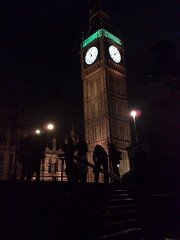
21/08/2008 It seems to be the Conservative sound bite of choice right now, but it seems an odd one if you ask me. What are they actually proposing? Are they asking for a two term limit of parties or leaders being in government? No. Are they proposing reforms of the electoral system? No. We might get some boundary changes, albeit on a larger scale than usual as we dispense of 60 or so MPs, and every time those happen after a change of hue, there’s always a strange bias towards the new rulers. Something that generally speaking ensures governments stay “in power too long”.

What has propelled this rallying cry? A man working in 10 Downing Street making up lies, then not using them but communicating about them with an idiot affiliated to the Labour Party (Derek Draper). Call me a bit cynical but I find the rage of the Conservatives more than a little artificial. I don’t think a competition on who can be the least tainted MP is what Westminster needs right now, what it needs is debate and reform. And we poor voters look likely to get neither and then end up with the Tories “in power too long” again. Little wonder the country lost appetite for a snap election last year, I suspect we remembered how little difference it would make.

In my more optimistic moments I hope that this seemingly inevitable Tory government does at least correct some of the excesses of legislation from the past few years then implodes after two years and thus forces us finally on the road to full reform when we finally fail to have enough people to agree and form a ruling party. My more pessimistic dreams end with us all bowing down to our new ruler King William.
Snow, The London Assembly Report

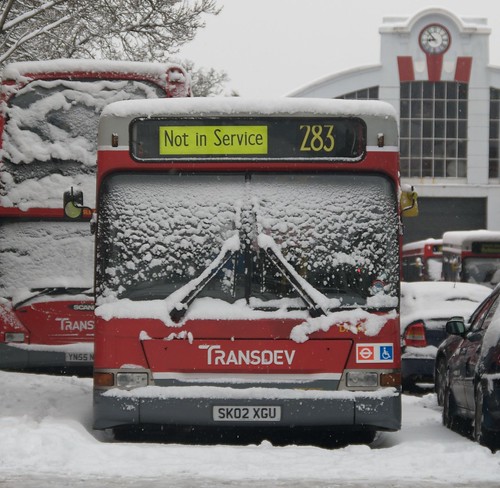
Not Coming Out To Play We’re now only a month since the TERRIFYING SNOW OF LONDON and after the inevitable Channel 4 documentary Snowstorm: Britain’s Big Freeze comes the London Assembly’s report on how (badly) London coped with the snow. There are many interesting points raised within it, one intriguing thing is that the tube was doing fine, seemingly, but not enough staff turned up. Whereas the buses got snowed in and were unable to traverse the roads safely but had a very good staff turnout:

All operators have reported high levels of staff turnout, driver attendance was between 80 – 90 per cent depending on garage locations, there are reports of drivers walking long distances to get to work, some abandoning their cars en route.

There’s an interesting point raised by TFL:

However, parts of the press consistently reported most of the lines were suspended, when, in fact, LU delivered service over approximately 80 per cent of the network, with the service delivered exceeding demand.

The tube was in fact running a reasonable service but of unusual nature that the terming of this as part closure, delays or severe delays on most lines then meant that most media reported that the tube was mostly shut.

Key also is that there was no defined hierarchy either in which transport modes, services or bus routes were considered most important to keep running with only a limited prioritisation of roads to grit. Most fundamentally the chain of command essentially snapped and the limited devolution London experiences failed to provide any strong leadership either from TFL or the mayor in large part because various agencies chose not to bother Boris or TFL and vice versa. The normal[1. and it pains me to put it this way, but I've seen it more often than snow in London] terrorist threat response of establishing a Gold command was not undertaken as the snowstorm was not seen as a major enough event.

Communications between the boroughs, the mayor and TFL were in many cases slim to non-existent. My particular borough (Hammersmith & Fulham), failed to submit anything to the committee but as this note shows

TfL received the first request from boroughs for assistance with grit supply on Monday morning, when Hammersmith & Fulham advised directly that they had run out

it was the first to run out of grit on the first morning of snow, which perhaps explains why they failed so comprehensively to grit the pavement in my street and the rest of the borough. As the report shows they even had to beg for grit from Ealing as well. This also led them to leaving the sort of nice Lyric Square as an ice hazard. Perhaps they didn’t have time to write down the complete account of their inability to make the streets safe.

I personally rather enjoyed the chaos of it all as I recounted in my earlier piece. Incidentally, I’ve been beaten in writing this post by The Londonist who’ve used the same photograph of mine. Hurrah for Creative Commons licensing, and nice snowy photos of London buses.

What Difference Does It Make?

Seeing as I posted the first comment on Tom Harris’s blog post that made the front page of the Daily Mail and have had a streaming torrent of (ooh) eight visitors here’s some comment on his points on my own blog.

I agree with Tom that it is sad that optimism is rare. In my own comment I pointed to three issues I myself find (slow rail links home, the poor quality of rental property and the long term effects of student debt), and others have pointed to some more interesting ones, my favourite of which notes that in an economic environment where the government is demanding below inflation pay rises those with student debts face interest rates rising high above the same inflation cap. So we have a government policy to squeeze the take home pay of graduates (and drop outs like myself). Not good.

I’ve come to the understanding that the optimism of the immediate post war period was there because society believed that utopia might still be possible and with hope of electricity too cheap to meter, an end to disease and poverty and education for all for example it was thought that the issues of society were possible to solve completely. Sadly now, we know all too well that we live in a world of scarcity not abundance, and that our choices have led and are leading us down a road to a world which we don’t like the look of. Knowing you need to turn back and think again isn’t nice.

Much is hysteria, we’re hardly drowning from global warming if the jet stream deflects a little and Glastonbury turns into a mud bath, and children are safer now than ever despite however many knives or paedos you see in the media. However, naturally, some fear is justified. We only get the one planet, and if we waste resources needlessly we don’t get them back. There’s a resources crunch behind the credit crunch at some level and talk of peak oil has gone from far fetched future to near term planning. Rail Minister Tom Harris (for it is also he) openly talks of a programme of electrification. That tells you all you need to know about the future direction of the oil price. He also dismisses a High Speed Line on spurious environmental and economic grounds, ironic considering he’d probably find a good north/south link rather handy in getting from his Glasgow constituency to Westminster and back.

We’ve had eleven years of Labour government, something I dreamed of in my teenage years. However, I have only voted Labour on a single occasion, as a second preference for Ken at the mayoral election this year. I have to remember sometimes that we have seen a Scottish Parliament, human rights legislation and a minimum wage introduced (which is itself going up by more than inflation anyway) because 14/28/42 days, the Regulation of Investigatory Powers Act, Identity Cards, DNA Databases and other similar daftness weigh heavier on the mind. Lots of law has been created, and money spent (even without the wars) and it is hard to see what improvements have been achieved. Little in the way of great projects have been accomplished so it’s hard to feel much love. There’s no Open University or NHS that this government leaves behind. Nothing huge. More of a series of pet projects, some of which, like devolution are now overdue for renewal and improvement due to the half hearted implementation they were initially given.

What many have also noted, and rightly so, is that what you could read as the symptoms of a happy society – lots of large televisions, bigger and better cars, more books, people eating out more often – may well just be the activities of a society which deep down is depressed and having to occupy itself to cope.

I’m reminded of one of my favourite books, David Boyle’s The Tyranny Of Numbers (subtitled Why Counting Can’t Make Us Happy) which works well at explaining why it can be so hard to achieve happiness by focussing on the numbers. I like to look on it as an earlier and more insightful Freakonomics and it’s well worth a read.

For King and Four Countries

Just been reading Anthony King’s report on the BBC network news coverage of the four UK nations for the BBC Trust. It’s a very well written, engaging and sometimes rather amusing document. In the main it doesn’t stick the knife in and there is much about the BBC to be praised, but here are some highlights for you to enjoy where that’s not the case. Firstly:

[In the main the BBC is unbiased] … However, there was one exception. Others drew it to our attention – an article in the Scottish edition of the Daily Telegraph was headlined ‘Fibs about Scotland on the BBC’ –and we could observe it for ourselves. It concerns the question of whether or not a group of people collectively called ‘the English’ – and, in particular, people called ‘English taxpayers’ – do, or do not, ‘subsidise’ a group of people collectively called ‘the Scots’. We were not in a position to monitor the BBC network’s entire output on this issue, but some of the coverage could give viewers and listeners the impression that there is a known and settled answer to this question and that the known and settled answer is that the English do, indeed, subsidise the Scots.

There is a very real and strange assumption that there is a subsidy as the BBC has asserted in various media several times. Perhaps no small part of the reason for the arguments to fail to advance towards anything resembling a resolution is down not just to Treasury intransigance but also a misinformed electorate, and possibly also politicians. Just remember, that’s the Daily Telegraph (scots edition admittedly) pointing out to the BBC how to be fair and accurate in reporting on Scotland. Questions of BBC bias are not as simple as Tory or Labour anymore, as my MP would do well to learn (p.s. Greg as you ask more written questions than the average MP, perhaps best not to lay into a journalist for asking questions themselves).

A second gem:

The events in Wales were important. They were obviously important for the people of Wales; the Welsh National Assembly has a wide range of devolved powers and controls a budget of £14 billion … However, the BBC’s UK-wide network, as distinct from BBC Wales, had little to say about any of these developments … Network news did, however, take considerable interest in another story emanating from Wales during the same May-July period. It concerned Shambo, a six-year-old Friesian bull.

It’s noted elsewhere that many in the BBC audience believe that often their local area was more likely to be covered as a quirky local interest story than anything of genuine note.

My favourite:

To be fair, there are millions of people in the UK, most of them in England, who have also failed to grasp, or even to notice, the scale of the changes that have taken place. To judge by what they say on television and radio, some of them sit on the green benches at Westminster, including the front benches.

Indeed, King notes that Ministers at Westminster are deliberately failing to append (of England (& Wales) (& Northern Ireland) to their job titles. He reckons journalists should do their best to make such things clear, though he also notes that our devolved system could hardly be more complicated and he reckons only a “select few” understand the Barnett funding formula, for example.

And a final shocker:

In our travels, we noticed, for example, that not all of the newsrooms we visited had maps of the UK on their walls.

My workplace is littered with UK Maps, indeed it seems you can’t be a director without having one somewhere. Personally I sit typing this with a large map of Scotland behind me, but I’m just a tad biased, and I have some London maps as well.

All in all, a great review, and now we must hope that good things come from it.

If this is the last blog I ever make, do write to me in Belmarsh

The London Police have started another lovely new terror campaign, in their continuing efforts to stamp out the rampant threat of terrorism in London that threatens us all. This time they’re targetting people with multiple mobile phones and people who take photos of CCTV cameras.

So, mutiple phones looks suspicious, in that case we’re dead if the terrorists find these sim switching devices. Quick, make the technology illegal, THEN we’ll be safe.

How do you take a photograph in central London without including a CCTV camera anyway? OMG! What if the terrorists find the internet, there’s lots of photos of cctv cameras there – and maybe a map of them! Why look, the London Borough of Lambeth are terrorists.

(sigh)

And that took about 60 seconds of googling, just think what the finest terrorists on earth could achieve in an hour.

It's Scotland's Toil

If you’ve been following the (ahem) coverage of the recent controversy about The Scottish Parliament investing in Scotland and trying to make it a better place you may be under the misapprehension that Scotland is some pampered area of the UK in receipt of money far in excess of that it brings in.

Ian MacWhirter, as ever calls it almost exactly right in his analysis of the performance of the SNP government, five months on.

The reckoning will come, of course, over next month’s budget. That’s when the opposition hope the SNP will be brought down to earth with a bump, now Gordon has pulled the financial rug out, and Scotland will return to the politics of disillusion and decline. How they’ll laugh as Salmond is forced to eat his manifesto, clause by clause. Yah-hah – see, they’re just as useless as us! Let’s wait and see. I suspect the voters will watch how Salmond copes with the financial situation before withdrawing support.

He also has a nice bit in The Guardian talking about The Herald’s investigation into the alleged subsidising of Scotland.

Of course, Scots could go it alone within Europe tomorrow and thrive, but they don’t because of a sentimental and increasingly anachronistic sense of filial obligation to England. They don’t want to break things up, risk bad feeling, let emotions get out of hand. Like Robert Tressell’s ragged trousered philanthropists, they feed London their wealth and skills; keep quiet about the oil, put up with people like Kelvin Mackenzie and Simon Jenkins because, well, they think its the right thing to do.

He’s not normally an SNP apologist or anything of the sort, indeed most of the time by far the majority of Scots journalists have had much to argue with the SNP as they’ve come from the innate Labour majority. However, much like the ordinary folk they’re starting to think a bit more independently and even if they’ll only vote for the SNP and not for independence it is enough of a shift to change the whole make up of the UK in the longer term. Now if only someone down here in London would start asking for my vote to push Federalism and Proportional Representation into both houses at Westminster. Until then I’m a bit lost on why I vote at all down here, the politics in Scotland at least seem alive.

Meanwhile back hame

newstandrews.jpg

OK, I admit that I’m a pedantic fellow and a bit sick of coverage of Scottish politics in the “national media” in general, but I think the BBC surpassed themselves in picking their news agenda for tonight’s 10 o’clock news.

Tonight at 7PM on BBC Scotland, a BBC investigation found that the election which got the SNP into (sort of) power which featured an “utter total guddle” (as Brian Taylor had it) was even more of a shambles than previously thought. There was an assumption, which had as yet been unchallenged that the somewhat ludicrous delays caused in counting votes were to an extent caused by the requirement to manually check spoiled papers in contested seats. However, it appears that tens of thousands of the 140k+ votes which were counted only as spoiled had been seen only by the counting machines. Pretty troubling given the performance of the counting machines overall.

So, having seen that I’d missed this I figured I’d watch the 10 o’clock news and see if they bothered to cover it, given the pretty good national coverage given to the postal voting scandal from earlier elections got covered rather well. I was rather surprised to find they had a live OB to the dark surrounds of Scotland’s Parliament, and looked forward to seeing how they covered it. But no, they were instead going live to talk to nobody and talk (if not whistle) in the dark about how the Scottish Executive is to be renamed the Scottish Government, whilst also prattling on a little about the discussions on further devolution and independence. Somehow they covered two very interesting topics without talking to anyone whilst clearly pointing out the change cost £100,000. Clearly, spending the money of the UK renaming a governing administration to a government is a waste of money. Going live to a presenter in the dark to do so, is however great value for money.

There’s a very good developing story going on in Scotland, which is worthy of a couple of good reports a week from a Nick Robinson like figure able to explain in detail whatever is going on really means. Intriguingly the (Rather good) white paper Scotland’s Conversation document issued by the Scottish Government (gives me joy to type that, I admit) suggests that two areas which are ready and waiting to be devolved further are broadcasting and the conduct of Scottish elections[1]. The BBC has firmly convinced me tonight that both of these are eminently sensible ideas. Now if only they could devolve the coverage of Scottish Politics to BBC Scotland, give them a few minutes in the national news and their fair, balanced and incisive coverage would be far less inflammatory and maybe even help save the union.

Incidentally, the post on Brian Taylor’s blog about renaming the Executive has almost entirely positive comments. And it was the Lib Dem’s idea anyway, though they quibble the cost.

now only 28p/minute

You may be a little confused yourself as to how exactly New Labour has managed to go from abandoning almost every road scheme when they came to power over ten years ago to spending the ungodly sum of £13bn expanding the roads network. Well, it turns out that it’s all the fault of some quite bonkers economic calculations in the DFT. I strongly recommend you take a look at the article because it’s a really good example of why sometimes you have to stop thinking in terms of numbers and calculations to reach a decision and instead take a look outside the window and breath in. Or even in this case, bother to take a look at the oil price. If they’re right that the Eddington review was based on a 30$ price for a barrel of oil then pretty much all transport policy is suspect and beyond contempt. Here’s a fair example:

How does this work in practice? Look, for example, at the scheme to widen a 56km stretch of the M1 between junctions 30 and 42. The cost to the taxpayer is £1.5bn, which sounds like a lot, but the Highways Agency has used the Nata system to claim that, over the next 60 years, the widening is worth no less than £4.5bn because of the time it will save travellers. Since this supposed “benefit” to the economy far exceeds the cost, the scheme has been approved.

Just how biased this system can be is set out in the Nata rules that assign lower values to other types of traveller. A minute saved on a cyclist’s travel time, for example, isn’t worth 44p but just 28p. A bus-user’s time is valued at 33p a minute. The implicit assumption is that cyclists and bus-users make less contribution to the economy than car drivers.

But I guess we knew this, and I don’t say this just because I want a bullet train to Edinburgh.